


Waiting for a marshmallow that isn’t yours
Imagine sitting in front of a marshmallow. If you wait a few minutes, you get a second one. Would you wait?
This is the classic design of the marshmallow task. It might ring a bell, as it is an established task within psychology first performed by Walter Mischel, dating back to the 1970’s. In this task, children were offered a marshmallow, or two marshmallows if they were able to wait a few minutes. This experiment started a long line of research aiming to grasp the concept of ‘delaying gratification’, or in other words, being able to wait for larger rewards. And it’s something we do all the time: doing homework for an exam months away, eating our veggies for a healthy future, planting bulbs in autumn for flowers in spring.
Researchers who examined delaying gratification with age found that children tended to be slightly worse at it than adults, preferring to eat one marshmallow now than wait for the second one. Adults on the other hand performed generally better (although they were often offered money instead of marshmallows). Research thereafter has shown that the ability to delay gratification develops rapidly during adolescence, especially between ages 13 and 16. This time period has therefore been investigated as a potential window of sensitivity, or rather opportunity, to develop the skill to delay gratification.
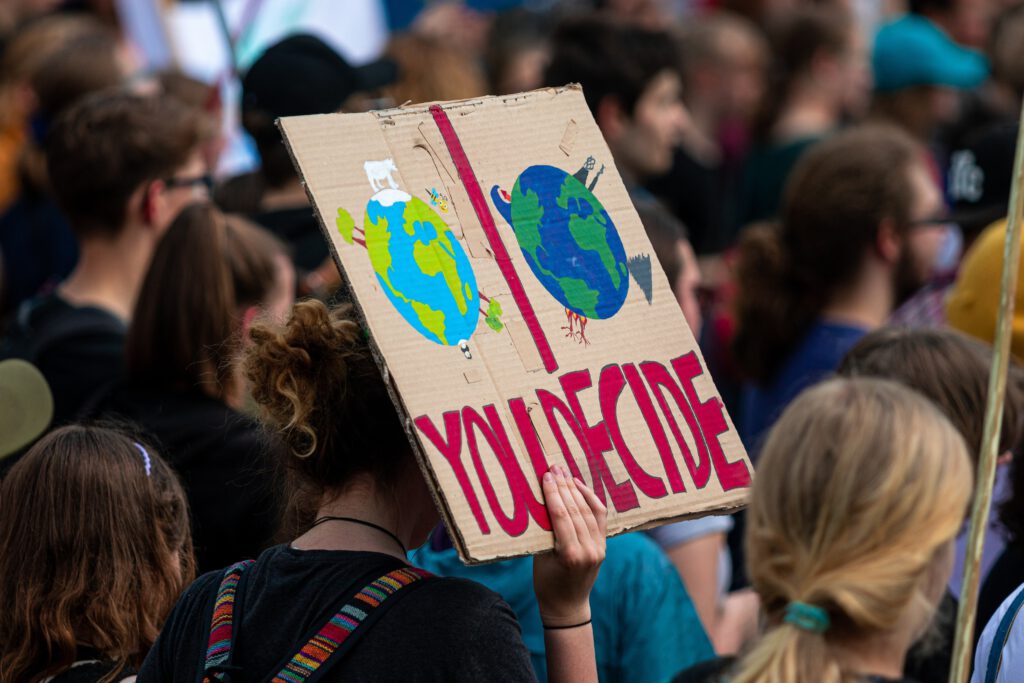
However, this developmental window coincides with broader socio-emotional development, expanding adolescents’ worlds to friends and broader society, including goals such as climate wellbeing, equality or poverty. So, waiting might not always just be about ourselves. Think of planting a tree you will never see, saving up for a gift for a friend, or choosing a more sustainable option today for a future you will hardly see. In these cases, the ‘second marshmallow’ does not end up on your plate, but on someone else’s. And during adolescence, a time in which friends, peers and society become increasingly important, this raises an intriguing question: does learning to wait also change when others are involved?
In recent research, we have tried to examine exactly this question. When choices involved a friend or a stranger, the brain did not just activate decision-making areas, but social brain regions too. Adolescents adapted their behavior based on who was involved. They still chose to wait (especially at shorter delays) but were more likely to pick an immediate reward for themselves when the other person was more distant. Social context is thus important for our ability to wait for rewards!
We additionally examined choices with climate consequences, a real-life example where the delayed reward benefits a more abstract societal goal. Here we again observed an effect of delay discounting, such that the longer the effect on the climate would take, the more self-preferential adolescents chose. However, we also observed an effect of motivation: those who felt more motivated were better at waiting.
So when someone says it’s all about willpower, remember that the context matters, especially when a marshmallow isn’t always for us. Whether we wait for it may depend on who it’s for, and why it matters to us.
Contact
Erasmus University Rotterdam
Mandeville Building T13
Burgemeester Oudlaan 50
3062 PA Rotterdam, the Netherlands